


“Global temperatures are likely to remain at record-high levels through 2025.”
— World Meteorological Organization (source)
As temperatures rise across the globe, chronic wounds become harder to manage. Conditions like diabetic foot ulcers, pressure injuries, and venous leg ulcers can worsen in extreme heat.
In this post, we’ll explain why summer poses a threat to wound healing—and show you a simple, 3-step routine to protect your wound.
Why Summer Is Risky for Chronic Wounds:
1. Sweat and heat = infection risk
Hot weather makes you sweat. That moisture collects around wounds, especially in shoes or under dressings. Bacteria love warm, wet places—and infections can happen fast.
2. More wound fluid
Heat speeds up your body’s circulation, causing more wound exudate. If your dressing can’t handle it, the wound may become too wet, delaying healing.
3. Extra friction
In summer, people move more. Walking, sweating, and wearing sandals or open shoes all increase the risk of rubbing or reopening a wound—especially on the feet.
4. Poor summer habits
Some skip dressing changes in the heat. Others wrap wounds in plastic or tight tapes. These habits can trap heat and worsen skin breakdown.
👉 The solution? A smart care routine that fights infection, controls moisture, and keeps you cool.
3-Step Summer Wound Care Routine
Managing chronic wounds in the summer doesn’t have to be complicated. We recommend a simple, effective approach:
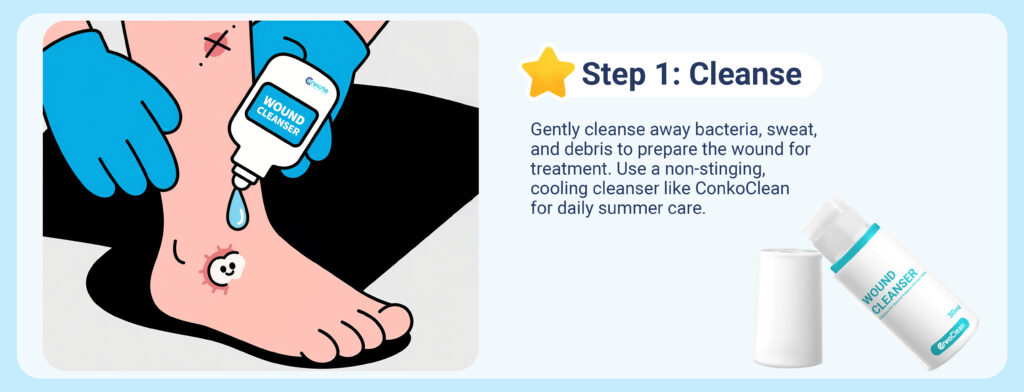
Step 1: Cleanse – Start with a fresh, soothing rinse
Cleansing is the first and most important step in wound care. In hot and humid conditions, it’s essential to remove bacteria, sweat, and debris from the wound without causing irritation.
- Avoid alcohol-based or harsh iodine solutions
- Choose formulas that soothe and refresh
- Daily cleansing prevents infection and promotes healing
⭐ Recommended Product: ConkoClean(Wound Cleanser)
Wound Cleanser combines benzyl alcohol for gentle antiseptic action and menthol for a cooling sensation.
Key benefits:
- Alcohol-free and non-stinging
- Reduces discomfort and itchiness
- Ideal for daily cleansing in summer heat
💡 Use ConkoClean(Wound Cleanser) to clean and refresh the wound before dressing.
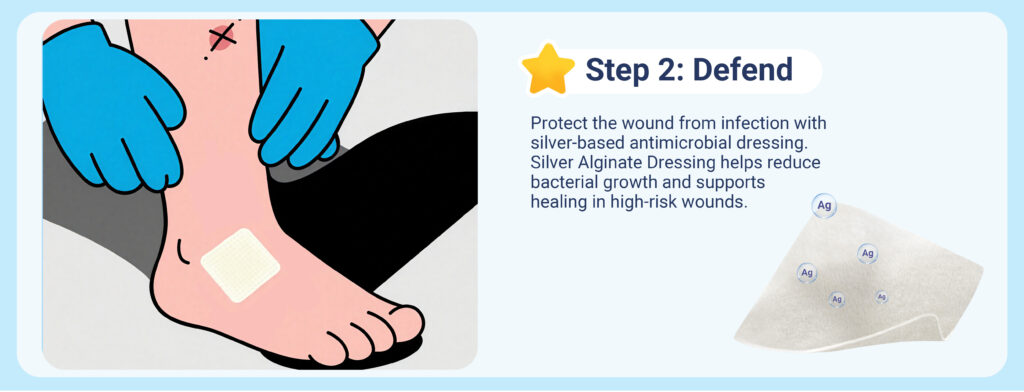
Step 2: Defend – Add protection with antimicrobial dressings
If the wound is infected or at risk of infection, antimicrobial dressings provide essential defense. Dressings containing silver ions are a good choice, as they help kill bacteria while also absorbing wound fluid.
- Use dressings containing silver ions to reduce infection risk
- Helps control odor, redness, and biofilm formation
- Suitable for diabetic foot ulcers, pressure injuries, and other chronic wounds
⭐ Recommended Product: ConkoAlgi Ag (Silver Alginate Dressing)
Key benefits:
- Dual action: antimicrobial and absorbent
- Forms a protective gel that adapts to the wound shape
- Supports faster healing and reduces infection
💡 If there’s a risk of infection, consider using ConkoAlgi Ag (Silver Alginate Dressing) after cleansing—ideally under the guidance of a healthcare professional.
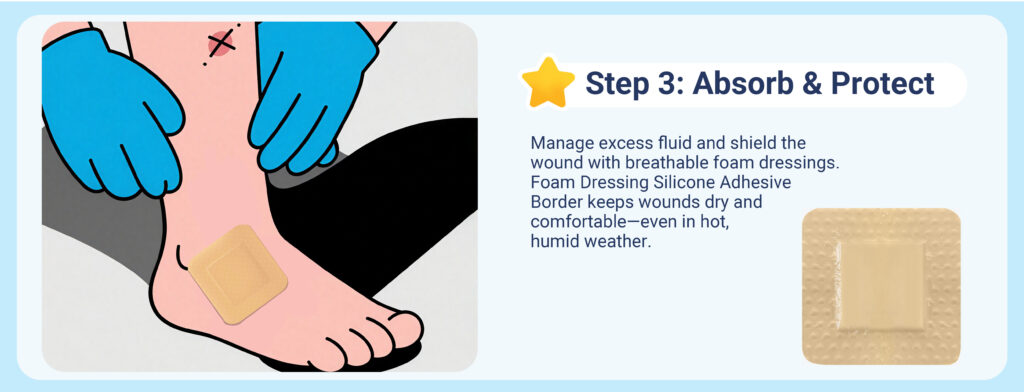
Step 3: Absorb & Protect – Control moisture and shield the wound
Even without infection, wounds often produce excess fluid during hot weather. Managing this moisture is crucial to prevent skin maceration and promote healing.
- Use foam dressings with high absorption to keep the wound dry
- Provides a soft, breathable barrier protecting against friction and contaminants
- Silicone adhesive offers secure fixation, ideal for summer use
⭐ Recommended Product: ConkoSil (Foam Dressing Silicone Adhesive Border)
Key benefits:
- High fluid absorption capacity
- Soft and breathable for comfort in summer heat
- Secure, gentle fixation that minimizes trauma on removal
💡 ConkoFoam (Foam Dressing Silicone Adhesive Border) can be used to absorb exudate and protect the wound—either on its own or as a secondary layer over antimicrobial dressings, depending on wound needs.
Additional Summer Wound Care Tips
- Inspect your wound daily, especially for signs of redness, odor, or excess fluid.
- Keep the wound area dry and breathable — change socks frequently and avoid plastic or airtight coverings.
- Avoid direct sunlight on open wounds; protect them with breathable fabrics.
- Stay well hydrated to support healthy skin and faster healing.
- Seek medical attention promptly if your wound worsens or shows signs of infection such as increased pain, swelling, or foul odor.
🛒 Need a Complete Wound Care Kit?
Visit our Shop to find expert-recommended wound care products designed for summer safety — including high-absorbency foam dressings, and effective antimicrobial protection. Build your own wound care kit or explore our ready-made bundles to keep your wounds clean and protected all summer long.
Disclaimer
This article is for educational purposes only and does not replace professional medical advice. Always consult your healthcare provider before using any wound care products, especially for chronic, deep, or infected wounds.