

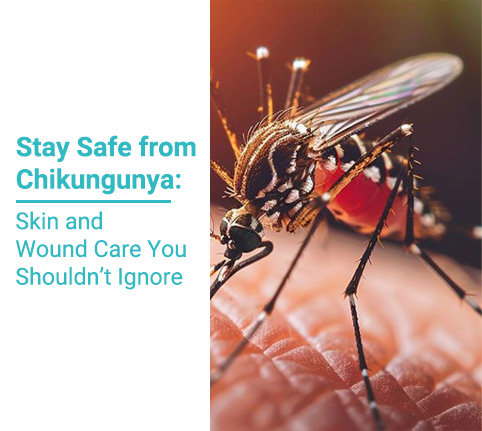
When mosquito-borne diseases like Chikungunya spread, protecting your skin becomes more than just comfort—it’s essential for your health.
Frequent mosquito bites can cause itching and scratching, leading to small wounds that may become infected. During an outbreak, simple wound care habits can make a big difference in preventing complications and keeping your skin healthy.
What Is Chikungunya?
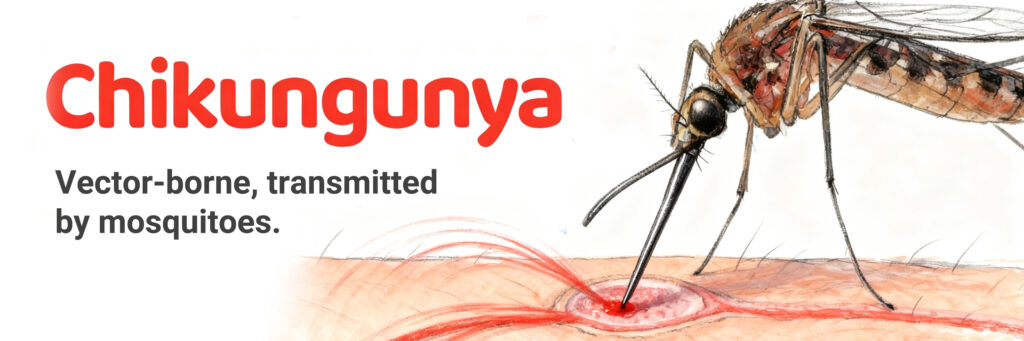
Chikungunya is a viral disease transmitted by Aedes mosquitoes, the same species responsible for spreading dengue and Zika viruses.
The name “Chikungunya” originates from an African word meaning “that which bends up,” referring to the joint pain that often causes patients to stoop or bend over.
Although the virus itself doesn’t spread through open wounds, the itching and scratching that come with infection can damage the skin barrier and increase the risk of bacterial infection.
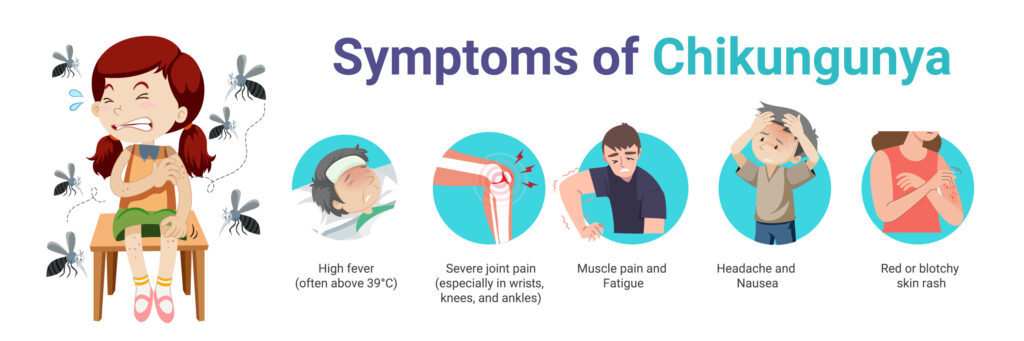
Symptoms of Chikungunya
Symptoms usually appear 4–8 days after being bitten by an infected mosquito.
Common signs include:
- High fever (often above 39°C)
- Severe joint pain (especially in wrists, knees, and ankles)
- Muscle pain and fatigue
- Headache and nausea
- Red or blotchy skin rash
Because itching and rash are common, it’s important to avoid scratching, which can cause skin breaks and small wounds that invite bacteria.
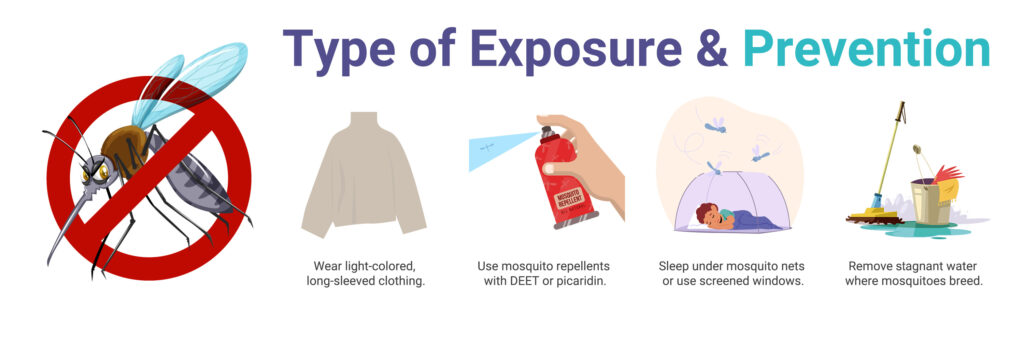
Type of Exposure & Prevention
Chikungunya spreads when an infected mosquito bites a person. You can reduce your risk by:
- Wearing light-colored, long-sleeved clothing.
- Applying mosquito repellent containing DEET or picaridin.
- Sleeping under mosquito nets or using window screens.
- Eliminating standing water around your home to prevent mosquito breeding.
Avoid scratching mosquito bites or exposing open skin to potential contaminants. Proper skin care and protection are key to minimizing infection risks.
Why Skin Protection Matters
During outbreaks, your skin barrier faces extra challenges:
- Scratching mosquito bites can break the skin and allow bacteria in.
- Hot, humid weather encourages bacterial growth.
- Improperly treated wounds may heal slowly and increase scarring risk.
Maintaining clean, protected skin helps prevent secondary infections and supports faster recovery.
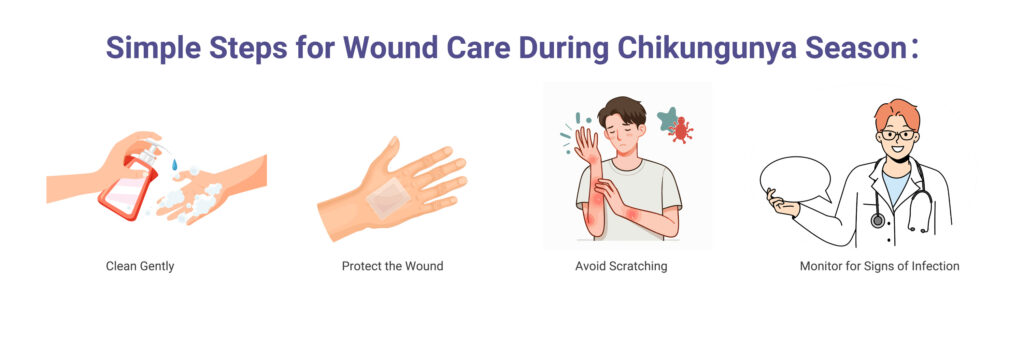
Simple Steps for Wound Care During Chikungunya Season
- Clean Gently
Wash the affected area with mild soap and clean water. Avoid alcohol or iodine solutions that can irritate the skin. - Protect the Wound
Apply a sterile, breathable dressing to prevent contamination while keeping the wound moist for faster healing. - Avoid Scratching
Do not scratch mosquito bites or healing scabs—it increases infection risk and may cause scarring. - Monitor Closely
Watch for redness, swelling, pus, or persistent pain. These could signal infection and require medical attention.
How Conkote Supports Skin Protection
Conkote offers advanced wound care solutions that help protect the skin, reduce bacterial risks, and promote healing during mosquito-borne disease outbreaks.
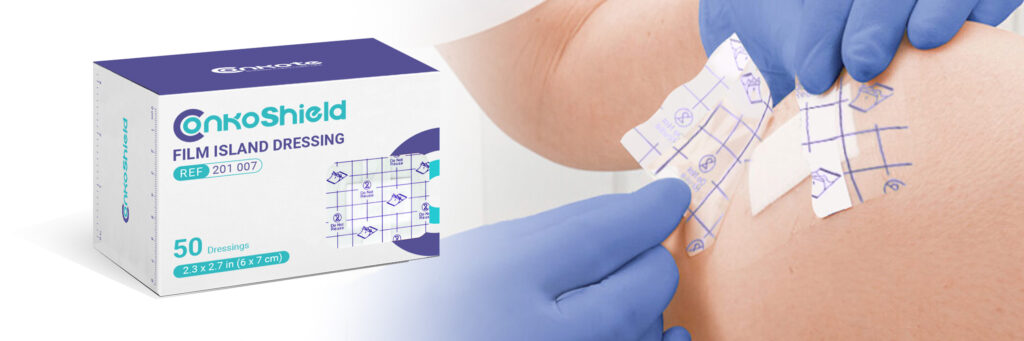
ConkoShield-Transparent Film Dressing:
A sterile, transparent adhesive dressing that provides a protective barrier against water, bacteria, and external contaminants, while allowing the skin to breathe and the wound to be visually monitored.
Together, these dressings support a clean, moist environment that promotes natural healing and helps maintain healthy skin.
Stay Aware, Stay Protected
While there’s no specific treatment for Chikungunya, taking care of your skin and wounds can help you stay safe and recover more comfortably.
Clean, cover, and protect — simple steps that go a long way during outbreak seasons.
Stay safe, stay protected — and let Conkote be part of your skin defense.