

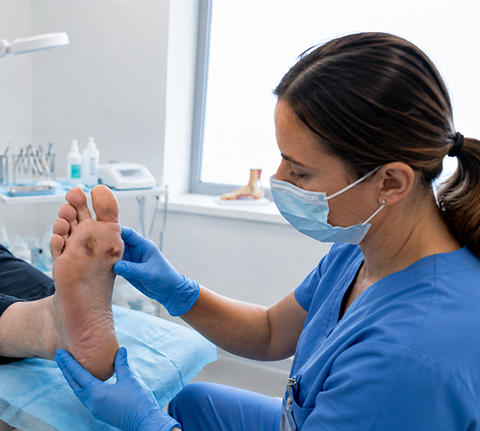
Diabetic foot ulcers require a structured approach to assessment and management. The wound itself is important, but factors such as neuropathy, impaired circulation, infection, and mechanical pressure can also influence healing.
A comprehensive assessment helps healthcare professionals understand the wound, identify factors that may delay healing, and develop an appropriate management strategy.
In the first article of our Diabetic Foot Ulcer Management Series, we discussed the causes, risk factors, and healing challenges associated with diabetic foot ulcers. In this article, we move from understanding the problem to assessing the wound and the factors that influence its management.
Start With a Comprehensive Wound Assessment
A diabetic foot ulcer should not be evaluated based on the wound surface alone.
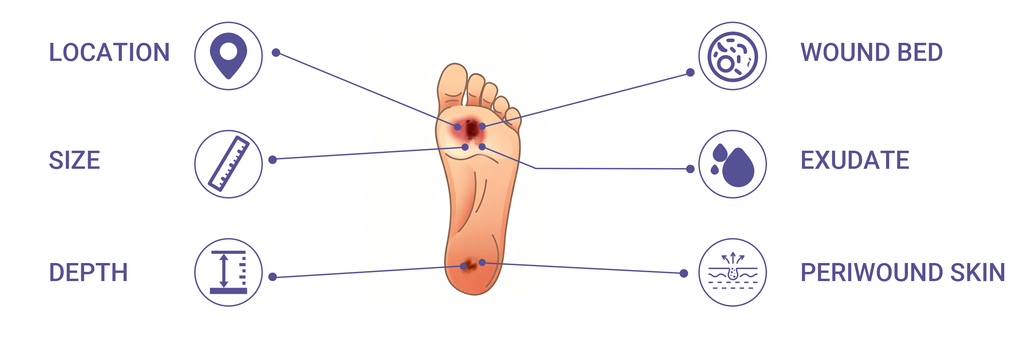
Assessment may include:
- Wound location
- Length, width, and depth
- Wound bed and tissue condition
- Wound edges
- Exudate
- Periwound skin
The location of a wound can provide clues about pressure, friction, footwear, or foot deformities that may be contributing to tissue damage.
Wound dimensions provide a baseline for monitoring progress, while wound depth and wound bed condition can provide information about the extent and stage of the wound.
Exudate should also be assessed by considering its amount and characteristics. Excessive drainage may contribute to periwound maceration and skin breakdown, making moisture management an important part of wound care.periwound maceration and skin breakdown, making moisture management an important part of wound care.
Look Beyond the Wound
The condition of the wound is only one part of a diabetic foot assessment. Healthcare professionals should also consider neurological status, circulation, infection risk, and other factors that may affect healing.
Neurological Status
Peripheral neuropathy can reduce protective sensation, making patients less aware of pressure, friction, heat, or minor trauma.
Identifying loss of protective sensation is important because repeated injury may continue without the patient recognizing it. Neurological assessment is also relevant to preventing future ulcer recurrence.
Circulation and Perfusion
Adequate blood flow is essential for delivering oxygen and nutrients needed for tissue repair.
When impaired perfusion is suspected, further vascular assessment may be appropriate. A wound may fail to progress as expected if an underlying circulation problem has not been recognized.
Infection Risk
Healthcare professionals should monitor for changes that may indicate infection or wound deterioration, including:
- Increasing or changing drainage
- Odor
- Local inflammatory changes
- Tissue deterioration
- Increasing pain or tenderness
When infection is suspected, appropriate clinical evaluation and treatment are necessary. Wound dressings alone should not be considered a substitute for appropriate infection management.

Address Pressure and Prepare the Wound
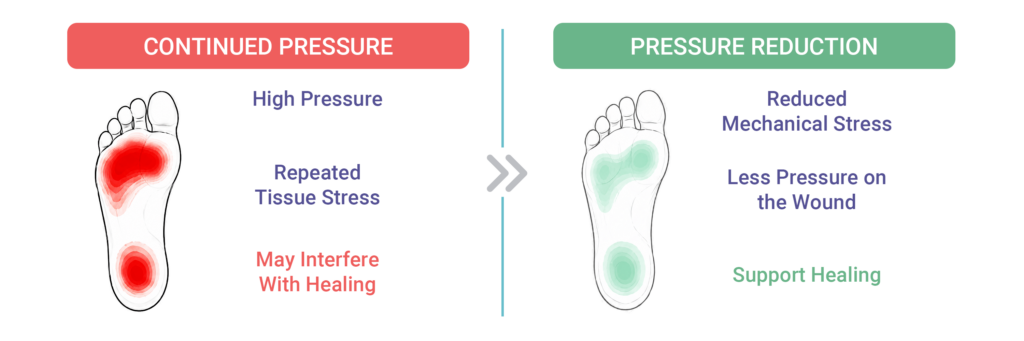
Mechanical pressure is an important consideration in diabetic foot ulcer management.
Weight-bearing, foot deformities, inappropriate footwear, friction, and shear can place repeated stress on vulnerable areas. If pressure continues to act on the wound, tissue damage may persist even when appropriate local wound care is provided.
For appropriate patients, offloading strategies may help reduce mechanical stress and support healing.
Managing the wound also means addressing the forces acting on the wound.
Once these factors have been considered, local wound management can focus on the condition of the wound bed.
Key considerations may include:
- Appropriate wound cleansing
- Management of devitalized tissue when clinically appropriate
- Moisture balance
- Protection of the wound and surrounding skin
A suitable dressing can help protect the wound and manage exudate, but dressing selection should follow wound assessment rather than replace it.
Monitor, Reassess, and Adapt
A diabetic foot ulcer should be reassessed regularly rather than evaluated only at the initial visit.
Healthcare professionals may monitor changes in:
- Wound size and depth
- Wound bed
- Exudate
- Periwound skin
- Signs of infection
- Overall wound condition
If a wound is not progressing as expected, the assessment should be revisited.
Potential barriers such as continued pressure, infection, impaired perfusion, neuropathy, or other patient-related factors may need to be reconsidered.
The goal is not simply to continue the same treatment, but to determine whether the management strategy should be adjusted as the wound changes.
A Comprehensive Approach to Diabetic Foot Ulcer Management
Effective diabetic foot ulcer management requires attention to both the wound and the patient.
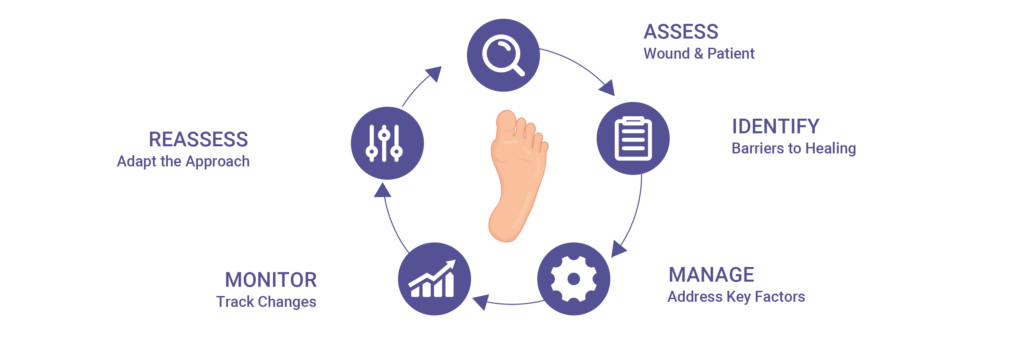
A practical approach can be summarized as:
Assess the wound and patient.
Identify factors that may delay healing.
Address pressure, infection, perfusion, and wound bed concerns.
Protect the wound and surrounding tissue.
Monitor and reassess over time.
This approach recognizes that diabetic foot ulcers are influenced by multiple factors and may require ongoing assessment and adjustment throughout the healing process.
Dressing Selection Comes After Assessment
Once the wound has been assessed, dressing selection becomes an important part of local wound management.
The appropriate dressing may depend on:
- Wound bed condition
- Exudate level
- Periwound skin
- Infection management considerations
- Overall clinical goals
There is no single dressing appropriate for every diabetic foot ulcer.
In the next article of our Diabetic Foot Ulcer Management Series, we will explore how wound characteristics and exudate levels can help guide dressing selection, including considerations for foam, alginate, and silver-containing dressings.
Conclusion
Diabetic foot ulcer management begins with comprehensive assessment.
Understanding the wound alone is not enough. Neurological status, circulation, infection risk, mechanical pressure, and wound condition should all be considered when developing a management approach.
By identifying factors that may interfere with healing and regularly reassessing the wound, healthcare professionals can make more informed decisions throughout the healing process.
Assess the wound. Address the contributing factors. Reassess the progress.