

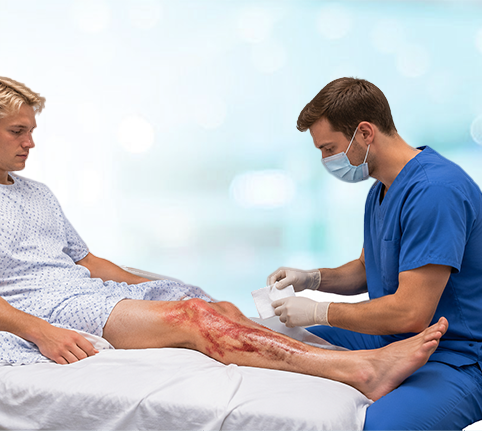
Burn injuries are among the most challenging wound types in modern healthcare. While burns are often viewed as surface skin injuries, the reality is far more complex. Burn wounds are dynamic conditions that can continue evolving after the initial trauma, requiring ongoing clinical assessment and structured wound management.
According to the World Health Organization (WHO), an estimated 180,000 deaths occur globally each year due to burns, with millions more requiring medical treatment and rehabilitation. Beyond mortality, burn injuries may also lead to prolonged hospitalization, pain, infection risk, and long-term recovery challenges.
Understanding burn wounds therefore requires looking beyond what is visible on the skin surface.
Burn Injuries Are More Than Surface Wounds
Burn wounds affect more than the outer layer of skin. Depending on the severity of the injury, burns may damage deeper tissues, blood vessels, nerves, and surrounding structures.
Burns are commonly categorized into:
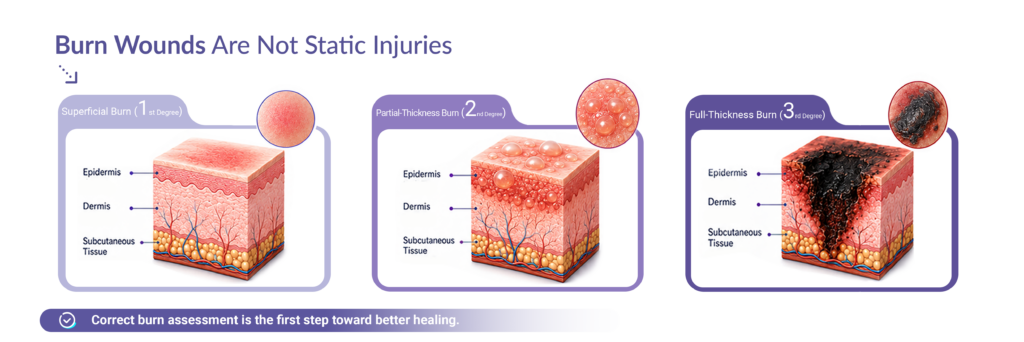
- Superficial burns — affecting only the outer skin layer
- Partial-thickness burns — involving deeper skin structures
- Full-thickness burns — extending through all skin layers and potentially underlying tissue
Each level of injury presents different clinical challenges and healing requirements.
Unlike many acute wounds, burn wounds may continue progressing after the initial injury. Tissue damage can worsen over time due to inflammation, impaired circulation, infection risk, and excessive moisture loss. This makes early assessment and ongoing wound monitoring essential throughout the healing process.
Why Burn Care Can Be Challenging
Burn care is more complex than treating a surface wound. Unlike many minor injuries, burn wounds may continue evolving after the initial trauma due to inflammation, moisture imbalance, and tissue damage progression.
Burn wounds are also highly vulnerable to infection because the skin barrier has been compromised. Infection risk, pain management, exudate control, and healing progression all require continuous monitoring throughout treatment.
In addition, dressing changes can be painful and may increase both patient discomfort and nursing workload, especially in more severe cases.
Because every burn wound heals differently, effective burn care often requires ongoing assessment and structured wound management rather than simple wound coverage alone.
Looking Beyond the Surface
Burn wounds should not be viewed as simple skin injuries. They are evolving clinical conditions that require careful assessment, ongoing management, and appropriate wound care strategies throughout the healing journey.
Understanding the hidden complexity of burn wounds is the first step toward improving both clinical decision-making and patient outcomes in modern burn care.